
Russia has already begun delivery of the first S-400 systems, and the question of sanctions, or of a waiver to sanctions, preoccupies New Delhi.
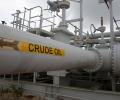
India will restrict crude oil purchases from Russia as part of an agreement reached with the US in exchange for lower trade tariffs, sources said, adding imports will continue for now by refiners such as Nayara Energy, which have no other alternative source. US President Donald Trump announced overnight that the United States will cut the reciprocal tariff on imports of Indian goods to 18 per cent from 25 per cent under a broader bilateral understanding.

'In the current environment, India is effectively paying a premium for supply security and diversification.'

US sanctions against two of Russia's largest oil companies are expected to impact Reliance Industries' crude imports from Russia, while state-run refiners may continue purchases through intermediary traders for now.

External Affairs Minister S Jaishankar has strongly defended India's decision to purchase Russian crude oil, stating that the country's energy choices are based on cost and availability, and highlighting the West's 'hypocrisy' in criticising India while historically supplying weapons used against it.

Sanctioning Russian oil would have led to a sharp surge in oil prices to above $80 per barrel levels, which would impact pump prices in the US ahead of midterm elections next year.

Russian President Vladimir Putin asserted that any attempts to undermine India's sovereignty through 'threats of sanctions' would 'boomerang immediately' under Prime Minister Narendra Modi's leadership, highlighting India's sovereign decision-making and strong national interests.

Indian Oil Corporation (IOC), the nation's top oil firm, has bought as much as 3 million barrels of crude oil that Russia had offered at steep discount to prevailing international rates, sources said. The purchase, made through a trader, is the first since Russia's February 24 invasion of Ukraine that brought international pressure for isolating Putin administration. Sources aware of the matter said IOC bought Urals crude for May delivery at a discount of $20-25 a barrel to dated Brent.
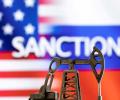
Russian shipments averaged 1.67 million barrels per day in January compared to 1.48 million bpd in December and 1.53 million bpd a year earlier.

Russian President Vladimir Putin has offered New Delhi Russia's fifth-generation stealth aircraft Sukhoi Su-57 and even suggested that the combat jet could even be jointly produced in India in line with the strong strategic partnership between the two countries.

President Trump addresses questions about US imports from Russia and India's stance on purchasing Russian oil, hinting at potential tariffs.
India's crude oil imports from Russia fell for a second straight month in January to its lowest in 12 months but the nation's insatiable appetite for Russian crude remains for the long term, according to data from energy cargo tracker and industry officials. Russia supplied 1.2 million barrels per day of crude oil to India in January, down from 1.32 million barrels in December and 1.62 million barrels in November 2023, according to data from energy cargo tracker Vortexa. Russia however continues to remain India's top oil supplier, accounting for a little less than a quarter of 4.91 million barrels a day of oil that the world's third largest energy consumer imported in January.

India may see a structural shift in supplies of crude oil with Russia emerging as a key source of fuels, a development that reduces New Delhi's dependence on West Asian oil, gives Indian refiners better bargaining power with price-setter Saudi Arabia, and improves overall energy security. The unexpected surge in supplies of Russian crude in the last few months, unthinkable until the war in Ukraine, may also deliver other unforeseen gains such as boosting exports of refined fuels to Europe, which historically has counted on Russian shipments. India has jumped on to the bandwagon of opportunistic buying of Russian crude but if calibrated carefully, Urals crude can be a long-term asset for India refiners.

'We need to be very vigilant as we are passing through some fraught times.'

United States President Donald Trump on Tuesday said India has not been a good trading partner and announced that he will raise the tariffs on New Delhi 'very substantially' over the next 24 hours because it is buying Russian oil.

Will rising tensions between US-Israel and Iran threaten crude oil supply through the Strait of Hormuz, putting India's fuel prices, imports, and economic stability at risk?
The government has no say in where the country's refiners source oil from because these are commercial transactions.

'The biggest point of contention is market access for US agricultural and dairy products.'

'Geopolitically and diplomatically it's a very difficult situation for India.'
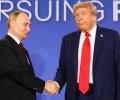
'No respite from economic pain is worth the loss of dignity and self-respect,' asserts former foreign secretary Shyam Saran.
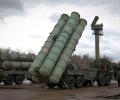
New Delhi is vulnerable to US sanctions under a 2017 law called CAATSA.
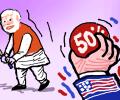
'Things may get much worse before they get better,' predicts Ajay Chhibber.

The defence secretary was responding to a question from Congressman Joe Wilson, a friend of India in the Congress who, of late, has been critical of India deciding to take an independent position on the Russian invasion of Ukraine.

US strikes on Iran's three main nuclear facilities have once again raised concerns that Tehran might shut down the Strait of Hormuz - one of the world's most critical chokepoints, through which a fifth of global oil and gas supply flows.
According to the original timeline, the ships were to be delivered by 2022, they said, attributing the delays in the delivery to Russia's war in Ukraine.

Lisa Curtis, who served as deputy assistant to President Trump and as National Security Council senior director for South and Central Asia from 2017 to 2021, said she expected the same bumps for India and the US, as in Trump's first term, including tariff, dependence on Russia over arms supply and oil purchase from Iran. Curtis, however, said both countries could never enter an alliance but develop a partnership that is "short of an alliance". She hoped them to achieve a cooperation that deters China, but also prepares both countries in case of a crisis or conflict, be it in the Taiwan Strait, the South China Sea, or another flare-up on the India-China border.

The high-level talks took place in the backdrop of indications that India could buy greater volumes of discounted Russian oil and both sides were keen on having a rouble-rupee arrangement for bilateral trade.

Foreign policy is always a work in progress and ups and downs are built into foreign policy process. What is permanent is national interest. Hopefully, this year, which will also witness general elections in the country, will also clear clouds in the foreign policy horizon, observes Rup Narayan Das.
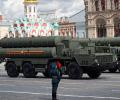
Notwithstanding its continuing military strikes against Ukraine, Russia has started supplying some components of the second regiment of the S-400 Triumf missile defence system to India, people familiar with the development said on Friday.
Indian imports of Russian oil plunged by a record in August month-on-month (M-o-M) as discounts on the fuel shrank in tandem with rising Brent oil prices. Higher crude prices will drive inflation or hurt earnings at oil companies and India's fiscal position if such spikes are not passed on to consumers. Indian purchases of Russian crude declined by around 24 per cent in August from July to the lowest level since January, with refiners expecting volumes to drop further amid rising rates of Russian benchmark Urals grade, substantial stocks at refiners, and planned maintenance at Indian refineries, according to ship tracking data and industry officials.

Lavrov said a rupee-rouble payment system for trade with India was put into place earlier and it could be strengthened further.
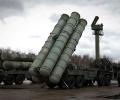
Russia has almost completed the delivery of major components of the second regiment of the weapon systems.

'India enjoys the maneuverability of a coming big power.' 'It is this possibility that has persuaded Moscow to humour India and stayed Washington from getting punitive about India's neutrality on the Ukraine issue.'

Russia is among the top buyers of Indian tea, accounting for about 18 per cent of the industry's total exports.

'The range of purchases throw a light on India's threat perception as also its perceived role of being a stabilising influence in the region,' says Brigadier S K Chatterji (retd).

'If a stranger refuses to pet my Russian dog, what treatment can I expect for myself?'

Gold is usually seen as a safe-haven when stocks are falling or when inflation is rising. With prices of the yellow metal hovering near record highs, people are also putting off their jewellery purchases. Along with a subdued marriage season, the orders with price open and settled on delivery day, too, are getting cancelled. Apart from high, volatile prices, there is no gold rush yet for the safe-haven asset, crimping demand.

'This is a good time to restructure your portfolio because the sectors and stocks that performed in the last bull market may not perform as much now.'

Russian firms expand their footprint in India. And take bigger steps to do business with India's private sector.

India must develop structured multilateralism to its defence buys
